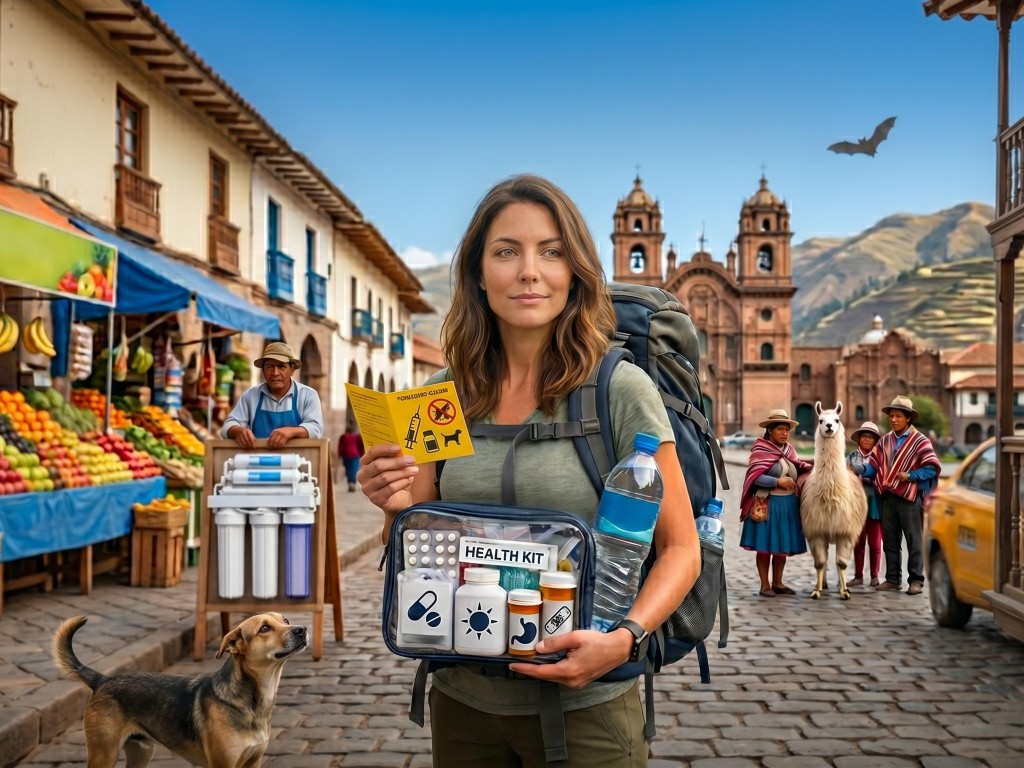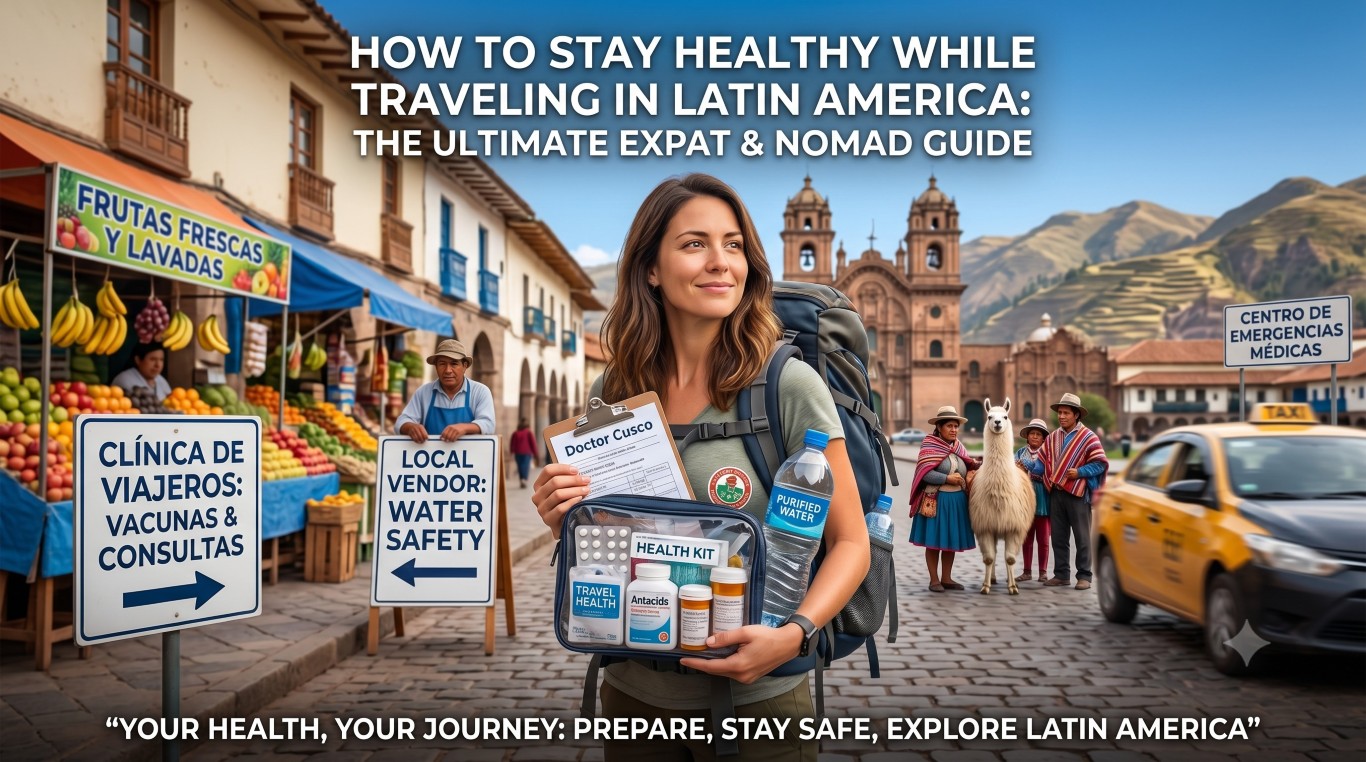
Exploring Latin America—from the vibrant streets of Lima to the breathtaking heights of Cusco—is an unforgettable adventure. However, health concerns shouldn’t hold you back from fully experiencing the region.
Whether you are a seasoned expat or a first-time traveler, this comprehensive guide will help you prepare for a safe, healthy journey.
Pre-Travel Preparation
Your health strategy should begin weeks before you board your flight.
- Schedule a Pre-Travel Consultation: Meet with your primary care provider 4 to 6 weeks before your trip to discuss your itinerary.
- Review Your Medical History: Discuss any chronic conditions. Purchasing medication locally can sometimes be challenging due to availability or different brand names.
- Stock Up on Prescriptions: Bring enough medication to last your entire trip, plus a few extra days in case of transit delays.
- Create a Medical Info Card: Keep a physical and digital list of your conditions, medications (with generic names), allergies, and emergency contacts.
Recommended Vaccinations for Peru & Latin America
Vaccine requirements vary wildly depending on whether you are visiting the coast, the Andean highlands, or the Amazon basin.
Important Alert: The U.S. Centers for Disease Control and Prevention (CDC) recently issued a Level 2 travel notice (practice enhanced precautions) regarding yellow fever in parts of South America, including Peru.
Here is a quick reference table for common travel vaccines based on official guidelines:
| Vaccine | Recommendation | Notes |
| Routine Vaccines | Highly Recommended | Ensure you are up-to-date on MMR, Tdap (tetanus, diphtheria, pertussis), and Seasonal flu. |
| Hepatitis A & Typhoid | Highly Recommended | Risk is present throughout the region; usually contracted through contaminated food or water. |
| Yellow Fever | Region-Specific | Essential if visiting the Amazon basin or areas below 2,300 meters (7,546 ft). Must be administered at least 10 days before arrival. |
| Rabies | Situational | Recommended if your itinerary includes extended outdoor activities, rural areas, or close contact with animals. |
Packing Your Travel Health Kit
A well-stocked kit is your first line of defense against minor ailments.
- Medications: Keep prescription meds in their original containers in your carry-on.
- Digestive Relief: Anti-diarrheal medication, antacids, and rehydration salts.
- Altitude Medication: If you are heading to the highlands, consult your doctor about altitude sickness pills.
- First Aid Basics: Bandages, antiseptic wipes, and antibiotic ointment.
- Protection: Sunscreen (SPF 30+), sunglasses, and insect repellent containing at least 20% DEET.
Food and Water Safety
“Traveler’s tummy” is common, but largely preventable.
- Water Safety: Avoid drinking tap water. Always opt for bottled, boiled, or treated water, even when brushing your teeth.
- Ice: Avoid ice in beverages unless you are certain it was made from purified water.
- Food Rule of Thumb: “Boil it, cook it, peel it, or forget it.”
- Street Food: Be cautious with raw foods from street vendors. Look for stalls with high local turnover.
Managing Altitude Sickness (Soroche) & Jet Lag
While jet lag affects your sleep, altitude sickness is the primary health factor when visiting Andean destinations like Cusco, the Sacred Valley, or Puno.
- Acclimatize Slowly: Take it easy for the first 24-48 hours.
- Hydrate: Drink plenty of water and avoid excessive alcohol or heavy meals upon arrival.
- Coca Tea: A traditional local remedy that helps many travelers adjust to the altitude.
- Jet Lag: Adapt to the local schedule immediately and spend time in natural daylight.
Emergency Preparedness in Peru
It is crucial to know where to turn if you need help abroad.
- Travel Insurance: Ensure your policy covers medical evacuations, especially if visiting remote areas.
- Local Contacts: Enroll in your embassy’s traveler program (like the U.S. STEP program) for safety alerts.
Need a Doctor in Cusco?
If you are traveling through the Peruvian Andes and need reliable, English-speaking medical assistance, do not let illness ruin your trip. Reach out to Doctor Cusco for prompt, professional care directly at your hotel or Airbnb.
Frequently Asked Questions (FAQs)
No, it is highly recommended to avoid drinking tap water. Stick to bottled or boiled water for drinking and brushing your teeth.
It is not mandatory for entry, but it is highly recommended (and currently under a CDC Level 2 alert) if you are traveling to the Amazon basin or areas below 2,300 meters. You do not need it if your trip is strictly limited to high-altitude areas like Cusco.
Use an insect repellent with DEET, wear long-sleeved clothing, and use mosquito nets if staying in rural jungle lodges.